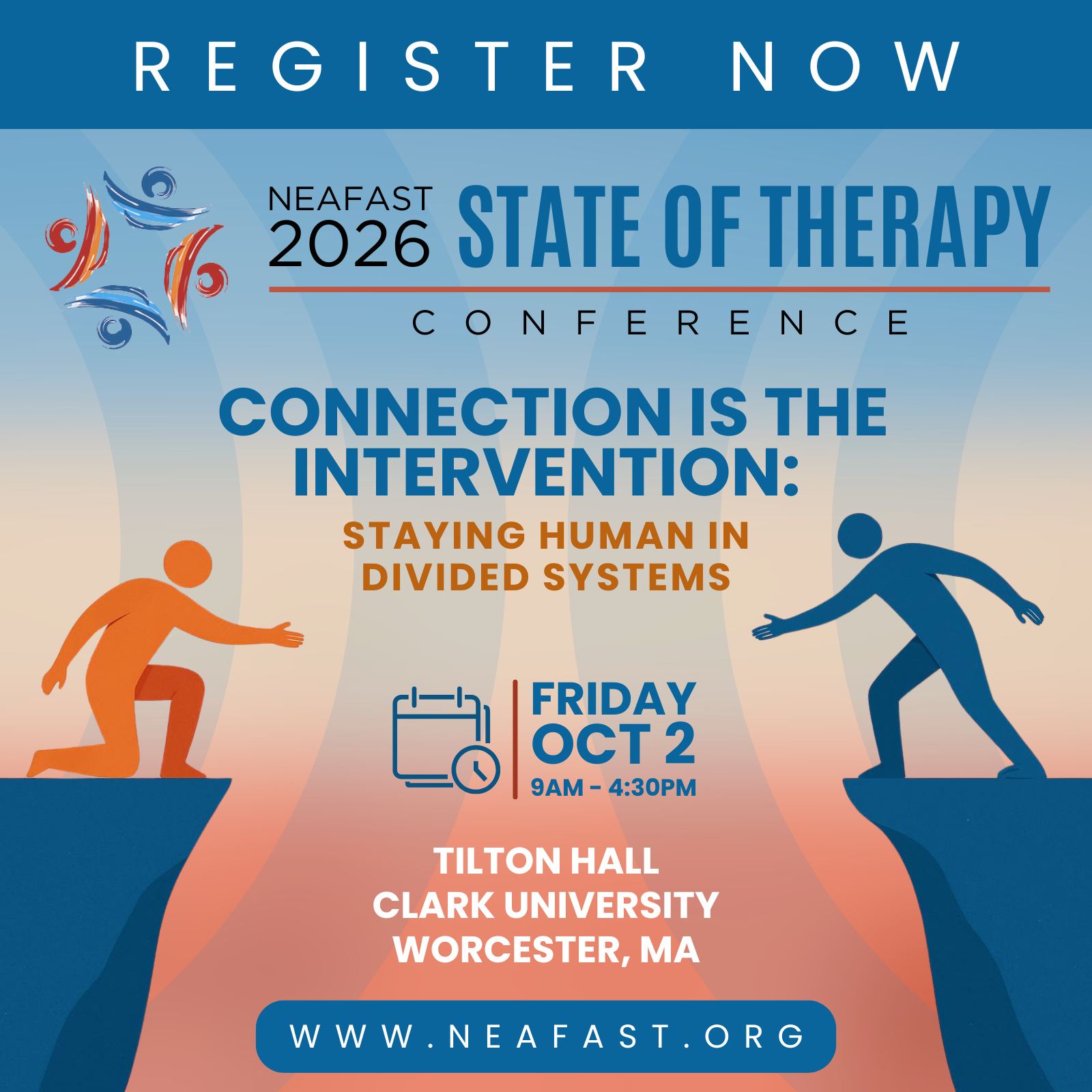
NEAFAST Annual "State of Therapy" Conference
Connection Is the Intervention: Staying Human in Divided Systems
DATE: October 2, 2026; 9:00am - 4:30 pm ET
6 CEs | Live In-Person
Clark University, Worcester MA
2026 presents unprecedented challenges not just for therapists and those we serve; humanity itself is under duress. Political divisions and generational gaps have created a family estrangement epidemic. State sanctioned violence is splashed across our screens while the algorithm assures addiction to them. Well-funded, powerful corporate interests unduly influence the nature of our work and create barriers to care and connection. And Artificial intelligence has given birth to artificial relationships, created economic uncertainty for all and has challenged the very notion of what it means to be conscious. Following last year’s well received and attendance record-setting State of Therapy 2025: The Future of Our Profession, this conference will continue the conversation on the topics that make our all too human profession more difficult than ever.
OVERALL SCHEDULE:
- 8:45 - 9 am - Arrival/Sign In
- 9 - 9:30 am - Welcome / Introduction / Ice Breakers
- 9:30 -10:45 am - Session #1
- 10:45 - 11 am - BREAK
- 11 am - 12:15 pm Session #2
- 12:15 - 1:15 pm - LUNCH (Catered/Included w/ registration)
- 1:15 - 2:30 pm - Session #3
- 2:30 - 2:45 pm - BREAK
- 2:45 - 4 pm - Session #4
- 4 - 4:30 pm - Closing Remarks
- 4:30 - 5:30pm - Optional Connection Hour (on-site, alcohol for purchase)
WORKSHOPS:
Each workshop will follow this format:
- TED Talk-like presentation that introduces the topic
- One provocative question that will be discussed in small groups
- A large group discussion of themes that stood out from the small groups
- Additional questions and answers
Session #1 (9:30 - 10:45 am)
Healing Political Divides: Doorways to Compassion
Politics and polarizing topics get in the way and erode relationships within family systems and communities. Often there is a yearning for connection that keep us in gridlock with loved ones. It is possible to not only have productive conversations about these topics, but they can also be done with compassion in a way that brings families and communities together and united against solving the problems politics tend to create.
 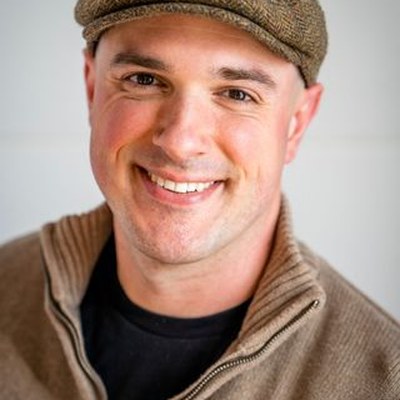 Chris Damon, LMHC (he/him) received his masters in mental health counseling from Salem State University in 2020. Chris worked in CBHI doing intensive in-home family therapy from 2013-2023. Now in private practice he specializes in men's health, couples and families, and anger management. Chris Damon, LMHC (he/him) received his masters in mental health counseling from Salem State University in 2020. Chris worked in CBHI doing intensive in-home family therapy from 2013-2023. Now in private practice he specializes in men's health, couples and families, and anger management.
Being Queer in a World that Hates You: The Trauma of Systemic Erasure of Queer and Trans Folks
The federal legalization of gay marriage felt like a watershed moment for queer liberation — a signal that LGBTQIA+ people had entered a seemingly "post-homophobia" era. That promise has not held. Since 2016, LGBTQIA+ individuals and communities have faced a sustained and accelerating rollback of rights, protections, and visibility.
Legislative attacks, removal of anti-discrimination protections, denial of gender-affirming care, rising hate crimes, and intensifying social bigotry have collectively sent a clear message: queer and trans people are not welcome and are not safe. The clinical consequences are significant. LGBTQIA+ clients are presenting not with opportunities to explore identity or heal relational wounds, but with existential dread, profound hopelessness, and chronic hypervigilance.
Rates of suicidal ideation, depression, anxiety, and social isolation have increased. Distrust of healthcare systems has deepened — a striking 30% of transgender people report deliberately avoiding medical or mental health care due to fear of discrimination. This creates a particular challenge in the therapy room. Clients arrive hoping clinicians will have answers; clinicians, facing forces largely beyond their control, often feel as helpless as the people they serve.
The result can be a relationship marked by tension, mistrust, and mutual discouragement. This workshop argues that clinicians do have something to offer — not a solution to systemic oppression, but a meaningful clinical response to it. Drawing on queer-affirming therapy and psychodynamic/relational approaches, attendees will learn how to move clients from the existential and overwhelming toward the personal and workable.
True affirmation — not mere tolerance — offers clients a space of genuine safety in a world that offers very little.
 Whitney Polich, LICSW (she/her) is a licensed clinical social worker and therapist at Concord Counseling Associates in Concord, MA. She holds a Master's in Clinical Social Work from Boston College and dual Bachelor's degrees in Psychology and Women, Gender & Sexuality from Dickinson College. Whitney specializes in trauma, PTSD, narcissistic abuse, and health anxiety, using an integrative approach that combines EMDR, Internal Family Systems (IFS), and somatic-focused therapies. An LGBTQIA+-identified clinician with a background in medical social work and crisis triage, she is passionate about helping individuals and couples build fulfilling, value-driven lives through compassionate, trauma-informed care. Whitney Polich, LICSW (she/her) is a licensed clinical social worker and therapist at Concord Counseling Associates in Concord, MA. She holds a Master's in Clinical Social Work from Boston College and dual Bachelor's degrees in Psychology and Women, Gender & Sexuality from Dickinson College. Whitney specializes in trauma, PTSD, narcissistic abuse, and health anxiety, using an integrative approach that combines EMDR, Internal Family Systems (IFS), and somatic-focused therapies. An LGBTQIA+-identified clinician with a background in medical social work and crisis triage, she is passionate about helping individuals and couples build fulfilling, value-driven lives through compassionate, trauma-informed care.
The Four Pillars of Interpersonal & Cultural Repair: What Couples Therapy Teaches Us About Connection in Divided Times
Cultural despair, political polarization, and chronic mistrust are no longer abstract forces. They are showing up in our therapy rooms, eroding the connective tissue of our clients' most intimate relationships, their workplaces, and their parenting.
Suspicion, held long enough, becomes a refusal to trust, and this refusal is now a rising trend in couples work, in organizational dynamics, and in the relationship between parents and children. This workshop draws on over twenty years of clinical experience with high-functioning adults and couples to explore how the culture of our discourse is intruding on the culture of the relationship.
Through anonymized clinical material, poetry, and creative presentation, the presenter will illustrate how grief can serve as a more powerful force for connection than grievance, why trust sometimes needs to precede trustworthiness, and how orienting to joy before descending into difficulty creates a foundation that makes transformation possible. Participants will explore the distinction between grievance and grief as relational postures, examine how cultural mistrust manifests in the couples they see, and discuss practical approaches to restoring trust as the central therapeutic framework.
The workshop will include a TED-talk style presentation followed by facilitated group discussion, inviting attendees to share how these dynamics are appearing in their own clinical work and what they are finding effective. This workshop is relevant to therapists working with couples, families, individuals, and organizations, and connects directly to the conference theme of staying human in divided systems.
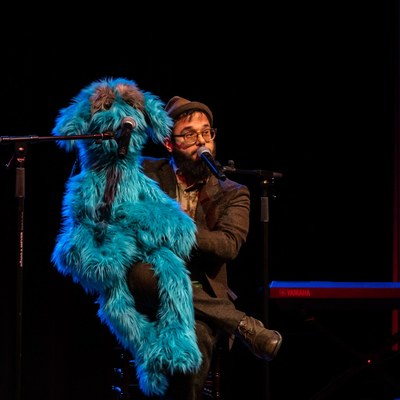 Avi Steinhardt, LCSW (he/him) is a psychotherapist with over twenty years of clinical experience working with high-functioning professionals and couples navigating anxiety, relationship strain, grief, and life transitions. He holds an MSW from New York University and completed advanced training at the Gestalt Institute of New England. His clinical approach integrates Gestalt therapy, psychodynamic theory, and depth psychology, with particular attention to how cultural and societal forces enter the therapy room and shape relational dynamics. Steinhardt's clinical work has been shaped by a parallel life as a jazz pianist, puppeteer, and writer. He is the creator of Monster Insight, a puppetry and mental health project featuring Louie, a Muppet-style puppet who blends clinical depth with humor and poetry. Steinhardt has served as emcee of the New York City Poetry Conference (2021, 2022), host of the New York Poetry Society Gala (2022), facilitator and performer at the Great Mother Conference, co-facilitator of a winter men's retreat in the Catskills, and has taught "The Poetics of Therapy" at the New York Poetry Society's Poetry Camp. Steinhardt's book, Anxiety Is Easier: Why We Choose Worry Over Presence, and What It Costs Us, is currently in development. Avi Steinhardt, LCSW (he/him) is a psychotherapist with over twenty years of clinical experience working with high-functioning professionals and couples navigating anxiety, relationship strain, grief, and life transitions. He holds an MSW from New York University and completed advanced training at the Gestalt Institute of New England. His clinical approach integrates Gestalt therapy, psychodynamic theory, and depth psychology, with particular attention to how cultural and societal forces enter the therapy room and shape relational dynamics. Steinhardt's clinical work has been shaped by a parallel life as a jazz pianist, puppeteer, and writer. He is the creator of Monster Insight, a puppetry and mental health project featuring Louie, a Muppet-style puppet who blends clinical depth with humor and poetry. Steinhardt has served as emcee of the New York City Poetry Conference (2021, 2022), host of the New York Poetry Society Gala (2022), facilitator and performer at the Great Mother Conference, co-facilitator of a winter men's retreat in the Catskills, and has taught "The Poetics of Therapy" at the New York Poetry Society's Poetry Camp. Steinhardt's book, Anxiety Is Easier: Why We Choose Worry Over Presence, and What It Costs Us, is currently in development.
Session #2 (11:00 am - 12:15 pm)
Is This Real Life? Reality Testing in an Artificial World
Is it "normal" for individuals to go out several times a week? Is it "normal" to look your best every minute of every day? Is it "normal" to see traumatic content unprompted and unannounced? If your frame of reference is coming from Instagram, TikTok, or X, the answer might be ‘yes.’ Clients increasingly arrive in therapy overwhelmed by social media that distorts perception, heightens emotional distress, and erodes trust in lived experience, relationships, and reality.
Traditional concepts of “reality testing” often feel insufficient in a digital landscape shaped by algorithms, parasocial relationships, misinformation, and chronic nervous system activation. This workshop offers therapists a relational- and ACT-based framework for helping clients maintain psychological grounding and human connection in the face of overwhelming digital environments.
Participants will explore how online systems influence cognition, identity, emotional regulation, and relationships across clinical populations. Importantly, boundary-setting exercises will be taught to establish empowered safety in an ever-invading digital world. Through didactic presentation and group discussion, attendees will learn practical interventions that support discernment, curiosity, and awareness without shaming or pathologizing clients’ online experiences.
Participants will leave with clinical strategies, discussion prompts, and frameworks for integrating digital reality testing into psychotherapy practice while helping clients reconnect with the (real) world around them.
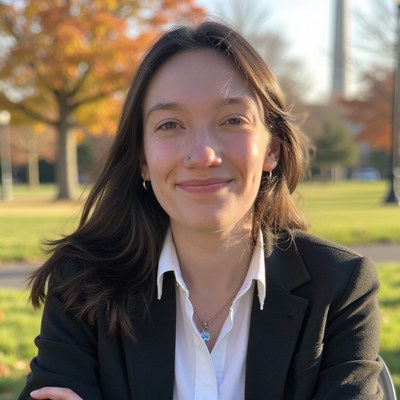 Caelyn Nordman, MA (she/her) is a mental health counselor and OCD specialist at Clearview OCD Counseling, LLC where she supports children, adolescents and adults navigating mood and developmental disorders, including autism, emetophobia and OCD. She specializes in exposure-based therapies (ERP, TF-CBT), acceptance and commitment therapy (ACT), and in gender-affirming psychotherapy. Caelyn earned her Master’s in Mental Health Counseling from Boston College and completed her clinical internship at a school-based health center, where she deepened her passion for working with youth. She also conducts research with the Affirm Lab at Boston College, focused on improving mental health outcomes for stigmatized youth (foster youth, SGMY). Caelyn Nordman, MA (she/her) is a mental health counselor and OCD specialist at Clearview OCD Counseling, LLC where she supports children, adolescents and adults navigating mood and developmental disorders, including autism, emetophobia and OCD. She specializes in exposure-based therapies (ERP, TF-CBT), acceptance and commitment therapy (ACT), and in gender-affirming psychotherapy. Caelyn earned her Master’s in Mental Health Counseling from Boston College and completed her clinical internship at a school-based health center, where she deepened her passion for working with youth. She also conducts research with the Affirm Lab at Boston College, focused on improving mental health outcomes for stigmatized youth (foster youth, SGMY).
Co-presenter Jayme Valdez, LMHC, is the founder and Clinical Director of Clearview OCD Counseling, LLC, a private practice with locations in Sudbury and Worcester, MA. Jayme is a licensed mental health counselor and previously served on the Boards of Directors for OCD Massachusetts and OCD Rhode Island. Jayme provides supervision, training, and consultation to educational institutions, treatment facilities, doctors, and clinicians and is devoted to spreading awareness of OCD recovery. She is particularly passionate about providing inclusive treatment for all persons with OCD, including those with substance use disorders, self-harming behaviors, as well as those in the LGBTQ+ and POC communities.
Co-presenter Andrew DeBenedictis is a mental health counselor and OCD specialist at Clearview OCD Counseling, LLC in Greater Boston. He holds a Master’s in Counseling from Boston College and has interned as a research assistant at Yale University and the University of Connecticut. Andrew specializes in treating OCD, ADHD, and anxiety disorders using exposure and response prevention (ERP), acceptance and commitment therapy (ACT), and executive functioning coaching. His clinical interests include relationship issues, men’s health, OCD comorbidities, ADHD, and addictive disorders. Outside of work, Andrew enjoys surfing, reading, cooking, and playing music.
Everyone wants a village but no one knows how to be a villager: exploring hyper-individualism through the lens of harmful social systems
This workshop will discuss people’s natural yearning for community as a core and fundamental desire of their well-being, but are unable to build or sustain it within the confines of our contemporary world.
Hurdles that block the ability to attain this very fundamental human need can be viewed through the lens of survival strategies or trauma responses to harmful social and family systems. Harmful systems create unrealistic expectations, limited time to participate, or issues with emotional reciprocity within relationships. Therefore, we will explore and examine survival strategies that hinder community development from a dysfunctional social systems perspective (family, society, etc).
These dysfunctional systems shape a perspective that teaches us that hyper-independence is safer, more valuable, and manageable, and less burdensome than being in community with others. Trauma and harm from systems convince us that our ability to depend on others is a sign of weakness or makes us a liability, rather than a pivotal and integral part of a healthy social system.
Today we are going to be working towards a more balanced and holistic realization of communal interdependence.
 Amber Berkins, LMHC (She/They) is an EMDR trained and trauma informed therapist with over 10 years working with folks who have experienced adverse childhoods and prolonged traumatic situations. Amber uses somatic tools, mindfulness, and bilateral stimulation in sessions to help clients build capacity around discomfort, grow emotionally, and release negative beliefs due to trauma. She is the founder and clinical supervisor of a fully virtual practice, Amber Berkins Mental Health Counseling PLLC. Amber Berkins, LMHC (She/They) is an EMDR trained and trauma informed therapist with over 10 years working with folks who have experienced adverse childhoods and prolonged traumatic situations. Amber uses somatic tools, mindfulness, and bilateral stimulation in sessions to help clients build capacity around discomfort, grow emotionally, and release negative beliefs due to trauma. She is the founder and clinical supervisor of a fully virtual practice, Amber Berkins Mental Health Counseling PLLC.
Queering the Family: Exploring Estrangement and Chosen Community
The topic of estrangement is gaining visibility, shifting from a shameful, isolating experience to one portrayed as empowering self-care and boundary enforcement. However, the reality is far more nuanced.
Is estrangement genuinely increasing, or is it simply being re-packaged in our individualist, already divided, society? Is estrangement selfish? empowering? isolating? brave? How have political divides infiltrated the smallest system of the family? Queer communities have long created and sustained families outside the rigid framework of the nuclear model. Their unique experience offers insights into the true meaning of creating and nurturing a family.
In this conversation we will explore the history of estrangement and the realities that impact family systems across the country. We will inventory and challenge our personal familial values to construct an updated, more inclusive working definition of family, drawing specifically from queer perspectives.
Our discussions will include the nuances and clinical implications of support from all angles: from the perspective of the person who estranged, the people they estranged from, and the impact felt across systems and generations.
Finally, we will address the challenging questions of whether, when, and how reunification is possible.
 Amber Lavendel, LMHC, LPC (she/her) is a licensed therapist and the owner of Project Passion Therapy. She has worked in the mental health field since 2019 in a variety of settings including case management, residential and group practice. At her practice she provides virtual services to individuals, couples, and polycules across Massachusetts, Connecticut, and New York (pending licensure). Specializing in sex therapy and relationship therapy, Amber supports clients navigating intimacy, communication, sexuality, and complex relational systems. Her work is grounded in her own identities and lived experience, as a result, she is deeply committed to creating an affirming space for nontraditional folks, especially those in sex work-, polyamorous-, kink-, and queer- communities. Amber Lavendel, LMHC, LPC (she/her) is a licensed therapist and the owner of Project Passion Therapy. She has worked in the mental health field since 2019 in a variety of settings including case management, residential and group practice. At her practice she provides virtual services to individuals, couples, and polycules across Massachusetts, Connecticut, and New York (pending licensure). Specializing in sex therapy and relationship therapy, Amber supports clients navigating intimacy, communication, sexuality, and complex relational systems. Her work is grounded in her own identities and lived experience, as a result, she is deeply committed to creating an affirming space for nontraditional folks, especially those in sex work-, polyamorous-, kink-, and queer- communities.
Session #3 (1:15 - 2:30 pm)
The System Inside the System: An IFS-Informed Approach to Couples and Families in Divided Times
Family and systemic therapists are trained to see the system in the room. Internal Family Systems (IFS) invites us to see a second system - the one inside each person - and to recognize that the two are in constant conversation. Protective parts get assigned roles the way family members do. Exiled parts carry burdens for the whole system, like a scapegoated child.
Managers triangulate, firefighters rupture, and the Self holds complexity without collapse. This workshop is for clinicians who already think systemically and want a practical framework for the charged issues now arriving in nearly every session: political polarization, intergenerational conflict over identity and values, and cultural or positional difference in the room.
Participants leave with a named, teachable clinical arc - Fierce Truth → Tender Truth → Connection - that uses IFS language to de-escalate charged content and move couples and families from protective entrenchment toward Self-led contact. Rather than bolting IFS onto systemic practice, the workshop shows how Schwartz’s framework is already a systems theory, recognizable to anyone trained in Bowen or Minuchin.
Connection is the intervention - but connection is a sequence of clinical moves, and most of us were never taught the moves.
 Jenny Pfeiffer, MA, LPC (she/her) is a licensed professional counselor and relationship coach and the founder of Fiercely Connecting Therapy & Coaching, with active licensure in Virginia, Massachusetts, and New York. Her practice integrates Internal Family Systems, Jungian analysis, depth psychology, and contemporary relational theory, with a systemic orientation throughout. She works with couples, families, and individuals navigating the places where inner protective systems meet outer relational demand. She has delivered keynotes, and her forthcoming book with Health Communications Inc. (2026) applies IFS to relational life. fiercelyconnectingtherapy.com | Instagram: @jennypfeifferlpc Jenny Pfeiffer, MA, LPC (she/her) is a licensed professional counselor and relationship coach and the founder of Fiercely Connecting Therapy & Coaching, with active licensure in Virginia, Massachusetts, and New York. Her practice integrates Internal Family Systems, Jungian analysis, depth psychology, and contemporary relational theory, with a systemic orientation throughout. She works with couples, families, and individuals navigating the places where inner protective systems meet outer relational demand. She has delivered keynotes, and her forthcoming book with Health Communications Inc. (2026) applies IFS to relational life. fiercelyconnectingtherapy.com | Instagram: @jennypfeifferlpc
When Everything Looks Like a Red Flag: Relationship Anxiety in the Age of Social Media, Therapy Culture, and Political Polarization
In today's cultural climate, clients are increasingly questioning their relationships through the lens of social media, online mental health content, and growing political and social polarization.
While greater awareness of relational dynamics can be beneficial, many clients struggle to distinguish between genuine relationship concerns and anxiety-driven hyper-vigilance. Therapists are hearing questions such as, “Is this a red flag?”, “Am I settling?”, and “What if I'm missing something important?” with increasing frequency. This presentation explores how anxiety, intolerance of uncertainty, reassurance-seeking, and perfectionistic decision-making contribute to relationship distress in this context.
It also examines how social media algorithms, “therapy speak,” attachment frameworks, and experiences such as ghosting can amplify doubt, reinforce pattern-seeking, and contribute to chronic relational monitoring. Drawing from Acceptance and Commitment Therapy (ACT), Exposure and Response Prevention (ERP), and attachment-informed interventions, attendees will gain practical tools for helping clients navigate relationship uncertainty, clarify values, reduce compulsive reassurance-seeking and over-analysis, and build flexibility in the face of ambiguity.
Clinicians will leave with concrete strategies to support clients in making values-based relationship decisions rather than anxiety-driven attempts to achieve certainty.
 Melissa Bloom, MA, LMHC, MBA, (she/her/hers) is a licensed mental health counselor and the founder of Place to Bloom Therapy in Cambridge, MA. Specializing in the intersection of anxiety disorders, OCD, and relational injuries, Melissa helps clients navigate the modern complexities of hypervigilance, perfectionism, and "therapy speak" in their relationships. Her practice seamlessly integrates ACT, ERP, and attachment-focused interventions to help individuals step out of anxiety-driven checking patterns and into values-aligned relationship choices. Melissa Bloom, MA, LMHC, MBA, (she/her/hers) is a licensed mental health counselor and the founder of Place to Bloom Therapy in Cambridge, MA. Specializing in the intersection of anxiety disorders, OCD, and relational injuries, Melissa helps clients navigate the modern complexities of hypervigilance, perfectionism, and "therapy speak" in their relationships. Her practice seamlessly integrates ACT, ERP, and attachment-focused interventions to help individuals step out of anxiety-driven checking patterns and into values-aligned relationship choices.
From Latchkey Kids to the Sandwich Generation: The Caregiver Paradox of Gen X Women
This powerful workshop examines a generation caught between competing demands — and conditioned to carry them all without complaint. We'll explore the far-reaching consequences of women's mass entry into the workforce during the 1970s and '80s: a seismic socioeconomic shift that reshaped the American family and quietly produced a generation of self-sufficient, under-nurtured children.
Those latchkey kids grew up — and many became the Sandwich Generation, now simultaneously raising children while caring for aging parents, all while holding down careers of their own. But the weight Gen X women carry isn't just circumstantial. It's deeply internalized. This interactive workshop will unpack how this generation was socialized to treat boundaries as negotiable, to measure their value by their output, and to define love through sacrifice.
I will give particular attention to the oldest daughter — a role laden with unspoken expectations that shaped identity long before adulthood and continues to drive behavior in boardrooms, bedrooms, and everything in between. If you were raised to give before you could ask, to lead before you were ready, and to hold it together so everyone else could fall apart — this workshop was made for you.
 Patricia Valencia, LMHC, LPC (She/Her/Hers) works with Gen X adults who are anxious, burned out, and carrying trauma they were told wasn't "that bad." Are you the one everyone else leans on? The caregiver, parent, oldest sibling? You might be the one who always shows up, figures it out, and keeps going — even when you’re running on fumes. Patricia built her practice around you because she knows what it's like to grow up in a world that handed you adult problems and expected you to handle them quietly. She is a Gen Xer, too. She lived through the same cultural messaging that said rest had to be earned, boundaries were selfish, and asking for help was weakness. Patricia Valencia, LMHC, LPC (She/Her/Hers) works with Gen X adults who are anxious, burned out, and carrying trauma they were told wasn't "that bad." Are you the one everyone else leans on? The caregiver, parent, oldest sibling? You might be the one who always shows up, figures it out, and keeps going — even when you’re running on fumes. Patricia built her practice around you because she knows what it's like to grow up in a world that handed you adult problems and expected you to handle them quietly. She is a Gen Xer, too. She lived through the same cultural messaging that said rest had to be earned, boundaries were selfish, and asking for help was weakness.
Session #4 (2:45 - 4:00 pm)
From fear to “fuck that noise!” Anger as a pathway to therapeutic change, community involvement, and speaking truth to process.
Anger and rage are highly conflated emotional experiences and generally gendered through a heteronormative lens.
However, these emotional experiences represent two very different experiences; one offering an acknowledgement of injury with a road toward witnessing, personal empowerment, and systemic change, while the other maintains despair, isolation, pathologizes normative responses to non-normative events.
Through the use of systemic family therapy, differentiation based models of relational therapy, contemporary intersubjective and transference based therapies, as well as critical social theory, this discussion will propose that anger can assist the process of change and provide pathways for communal connection and social action as aspects of empowerment.
Specific attention will be paid to the impact of moral injury on systemic therapists addressing the current political climates racism, classism, heteronormativity, ageism, and ableism that support avoiding anger as a pathway to optimal psychosocial healing, therapies that de-contextualizes the existential threat of theofascism, and person of the therapist dynamics that, when explored with colleagues and supervisors, challenge isomorphic process that make anger a difficult topic to engage in therapy.
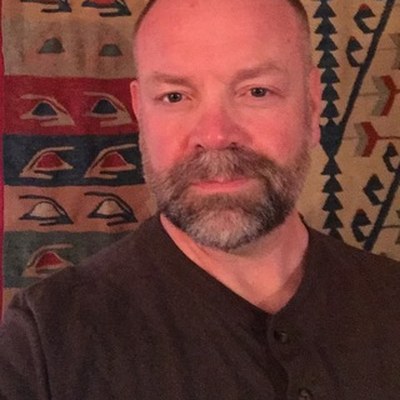 Joe Winn (He/Him/His) is a clinical social worker, AASECT certified sex therapist and AASECT certified supervisor of sex therapy. He received his MSW from BU in 1995 and has maintained a private and supervisory practice since 2006. His post graduate trainings have focused on Bowenian family therapy, Structural, Strategic, and constructivist models of therapy. Joe has trained in EFT, Gottman Method, and The Developmental Model of Couples Therapy, and has trained, locally, nationally, and internationally, on various topics of human sexuality and relational therapy, and is a member of the training faculty at The South Shore Sexual Health Center. Joe Winn (He/Him/His) is a clinical social worker, AASECT certified sex therapist and AASECT certified supervisor of sex therapy. He received his MSW from BU in 1995 and has maintained a private and supervisory practice since 2006. His post graduate trainings have focused on Bowenian family therapy, Structural, Strategic, and constructivist models of therapy. Joe has trained in EFT, Gottman Method, and The Developmental Model of Couples Therapy, and has trained, locally, nationally, and internationally, on various topics of human sexuality and relational therapy, and is a member of the training faculty at The South Shore Sexual Health Center.
The Addiction Economy and the Starving Self: Why Belonging Has Become a Behavioral Trap
Addicts (and the rest of us) are chasing feelings. We are living in a time of disconnection, especially from feelings. Technology, political upset, and the erosion of community have created conditions functionally similar to trauma and developmental neglect. People are experiencing feelings of pain and fear, powerlessness, and meaninglessness that cut them off from relationship and community.
Community is where they would normally access feelings of belonging, connection, meaning, and identity; and these feelings are not luxuries. They are the survival needs of the psychological Self. When access to these needed feelings is blocked, people don't stop needing them. They find another path. The addiction economy with gaming, sports betting, pornography, and social media algorithms creates the sense of connection and community they crave.
In SAFe-State addiction theory this set up the perfect conditions for compulsion. It gives us a behavior linked to a Self-Affirming Feeling experience. These are the feelings the addict (and the rest of us) are starved for: connection, belonging, existence, identity. The addiction economy makes these feelings available. The behavior gets linked to the feeling. The compulsion is born.
And we have to deal with it. This workshop presents a feeling-state framework for understanding behavioral addiction as a survival response to lifestyle disconnection. Using Psychological Survival Theory and Feeling-State Theory, clinicians will learn to think differently. Thinking not in terms of why-because causation, but in terms of what needed feeling is driving the addiction behavior.
And more importantly: how to break the link between behavior and feeling and restore the person's access to what they actually need.
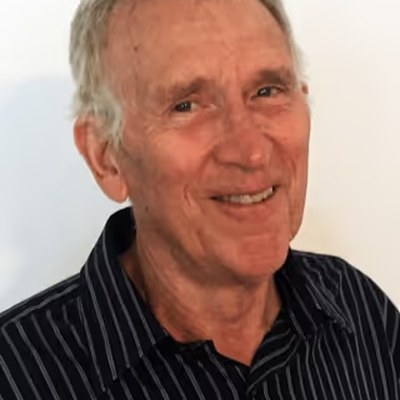 Ross Hackerson (he/him) is an experienced clinician working with EFT, EMDR and ImTT; utilizing his experience in all three to work with addictions and the compulsive behaviors of regular therapy. He has developed a feeling state focused approach to addiction that can be used with individuals and couples. Ross Hackerson (he/him) is an experienced clinician working with EFT, EMDR and ImTT; utilizing his experience in all three to work with addictions and the compulsive behaviors of regular therapy. He has developed a feeling state focused approach to addiction that can be used with individuals and couples.
The Family Estrangement Epidemic: A Systemic Approach Beyond Cutoffs and Blame
Family estrangement has become increasingly common, with therapists frequently encountering adult children, parents, and extended family members navigating fractured relationships. Yet discussions of estrangement often become polarized, positioning one party as the victim and the other as the problem.
This workshop examines estrangement through a family systems lens, exploring how intergenerational trauma, cultural shifts, social media, changing expectations around boundaries, and broader societal forces contribute to relational ruptures. Participants will learn how to assess estrangement without pathologizing either party, recognize their own clinical biases, and support clients in clarifying whether reconciliation, redefinition, or continued distance best serves their goals.
 Emily DiPalma, LMFT (She/Her) is an AAMFT Approved Supervisor and owner of Little Blue Sky Wellness, a private practice serving individuals, couples, and families throughout Rhode Island and Massachusetts. She specializes in relationship dynamics, family systems, and helping clients navigate conflict, disconnection, and life transitions. In addition to her clinical work, Emily provides clinical supervision and serves as adjunct faculty, where she is passionate about training the next generation of therapists in systemic thinking and relationally focused care. Her work is informed by a deep interest in how families navigate connection, conflict, and repair in increasingly complex social and cultural landscapes. Emily DiPalma, LMFT (She/Her) is an AAMFT Approved Supervisor and owner of Little Blue Sky Wellness, a private practice serving individuals, couples, and families throughout Rhode Island and Massachusetts. She specializes in relationship dynamics, family systems, and helping clients navigate conflict, disconnection, and life transitions. In addition to her clinical work, Emily provides clinical supervision and serves as adjunct faculty, where she is passionate about training the next generation of therapists in systemic thinking and relationally focused care. Her work is informed by a deep interest in how families navigate connection, conflict, and repair in increasingly complex social and cultural landscapes.
Registration Fees:
The annual State of Therapy Conference includes the opportunity to learn from, connect, and collaborate with other family and systemic therapists. The following fees will give you 6 CEs, lunch, and the opportunity to network with the brightest, most talented relational therapists in New England:
Early Bird (July 10th- Aug 27th)
Pre-Licensed Member - $130.00
Member - $190.00
Non-Member - $210.00
Regular Registration (Aug 28th- Oct 1st)
Pre-Licensed Member - $170.00
Member - $200.00
Non-Member - $220.00
Student Members - $40 with support from the Emily Mitchell Scholarship Fund
Become an NEAFAST Member!
POLICY DISCLOSURES & PARTICIPANT EXPECTATIONS
This activity is certified by the New England Association for Family and Systemic Therapy (NEAFAST) on behalf of the Massachusetts Board of Registration of Allied Mental Health & Human Services Professions for LMFT professional continuing education.
This activity has been certified by the Massachusetts Mental Health Counselors Association, Inc. on behalf of the Massachusetts Board of Registration of Allied Mental Health & Human Services Professions for LMHC professional continuing education.
This activity has been certified by NASW-MA for social work continuing education credits.
Please contact us at [email protected] for the status of CE accreditations.
It is the participant’s responsibility to check with their individual state boards to verify CE requirements for their state.
This program is being offered independent of any commercial support or conflict of interest. Clinicians with any level of experience are welcome to participate.
Attendance Policy: All participants seeking continuing education credit must attend the entire program. NEAFAST may, in cases of medical emergencies or other extenuating circumstances, offer partial credit if 80% of the overall credit hours were completed. Please speak to the instructor/facilitator as soon as possible about this if necessary.
Cancellation Policy: There will be NO REFUNDS. It is the participant's responsibility to plan to attend the entirety of the conference.
|